What Scotland Wants: Real Land Reform for Our People, Wildlife and Environment
Scotland’s manifesto …
Read the document
Land Reform: What Scotland Wants
LAND REFORM: WHAT SC …
Read the document
Restoring the Scottish Uplands: ensuring the carbon market delivers maximum public benefit
Much of the 70% of Scotland’s land area that is classed as upland is ecologically degraded. Restoration of this land is urgently needed to help tackle both the climate and biodiversity emergencies and to provide resilience to future change. Scotland’s degraded uplands have huge potential to capture and store carbon through changes in land management.
Read the document

Taxing land in Scotland
Land is possibly the greatest immovable asset and store of wealth in Scotland that is not currently taxed. This paper offers Scotland an intriguing option, at a time when the Scottish Government is looking at land taxation, for what a land tax could look like and how it can work. It could be a powerful and effective tool to achieve genuine land reformat a pace that those who advocate for land reform would expect and hope for. Author: Doctor Craig Dalzell, Head of Policy and Research at Common Weal. Commissioned by REVIVE
Read the document

Killing to Kill
Loading… Taking to …
Read the document
Muirburning for grouse: does it increase or decrease net carbon emissions?
This independent report (commissioned by REVIVE) debunks the surprising claims by opponents of grouse moor reform that muirburn is somehow good for the environment and carbon sequestration. The report also shows that reducing/ending muirburn can unlock greater opportunities for biodiversity and carbon sequestration in our uplands.
Read the document

Work the Land
The employment and economic opportunities of grouse moor and land reform.
Read the document

Towards a robust and comprehensive licencing scheme for shooting estates
This briefing outlines what grouse moor licencing should look like, what it should achieve and looks at how accompanying legislation should end the circle of destruction that surrounds the controversial industry. If these recommendations are put into place the unnecessary intensity of grouse moor management will end. If these recommendations are adopted by the Scottish Government, they will achieve their own stated goal of allowing a transition to better land uses for our economy and biodiversity. This will benefit our people, our wildlife and the environment.
Read the document

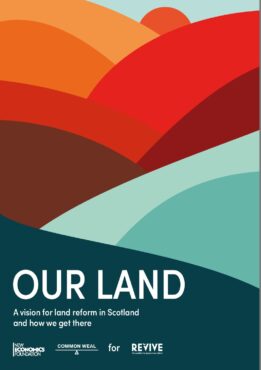
Our Land: a vision for land reform in Scotland and how we get there
Our Land: a vision for land reform in Scotland and how we get there offers a road map of how to achieve real land reform and shows that it’s all possible with the current powers of the Scottish Parliament. Grouse moors are a metaphor for the problems of land ownership – a few people managing land very badly at the expense of our people, our wildlife and the environment. Our Land shows us the way out of these problems with authoritative conviction while offering a vision for how Scotland might look.
Read the document
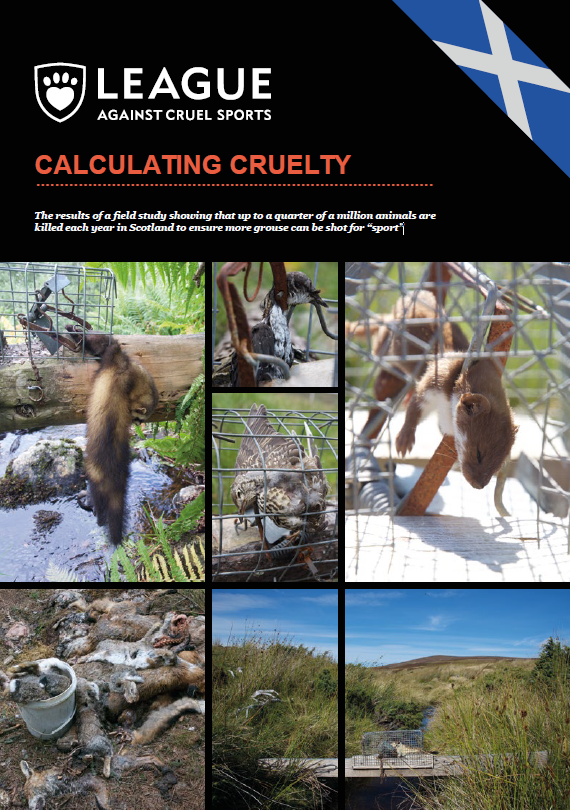
Calculating Cruelty: The results of a field study showing that up to a quarter of a million animals are killed each year in Scotland to ensure more grouse can be shot for “sport”
This report reveals that up to a quarter of a million animals are killed each year in an attempt to totally eradicate foxes, stoats, weasels, along with any other animal that indiscriminately fall into the traps and snares. Research shows that nearly a half of the animals killed are “non target species” such as hedgehogs, dippers and mistle thrush. This killing happens for one reason – to ensure there are more grouse to shoot for “sport”.
Read the document
Revive Manifesto
This Revive Manifesto sets out policies that we believe the next Scottish Parliament should address if it is serious about tackling climate change, land reform, social justice, protecting Scotland’s wildlife and biodiversity.
Read the document
A Better Way: How an alternative to grouse moors could help tackle climate change, increase biodiversity and benefit Scotland’s people
“Grouse moors, both burned and unburned, are lower in structural and species diversity, are less biologically productive and provide fewer ecosystem services than the woodlands, scrub and peat-forming bogs that could replace them. Continued management as grouse moors will maintain a large area of Scotland’s land in an impoverished state.” – This independent report commissioned by Revive, written by Dr Helen Armstrong (an expert in sustainable upland management), shows how an alternative to grouse moors can benefit our environment, our biodiversity and our people.
Read the document

Untold Suffering: How thousands of animals are trapped, snared and killed
Untold Suffering, published by the League Against Cruel Sports Scotland and OneKind, documents the extent to which animals are being killed and subjected to negative welfare impacts to ensure grouse stocks are kept artificially high to be shot for entertainment. The report was commissioned by Revive, the coalition for grouse moor reform.
Read the document

Back to Life: Visions of Alternative Futures for Scotland’s Grouse Moors
Grouse moor management contributes little more than 0.02% of Scotland’s overall economy (GVA) and yet huge swathes of the country are dedicated to it. This report commissioned by Revive, written by the Common Weal think-tank, puts the economics of grouse moors firmly under the microscope by comparing them to other land uses that are less environmentally damaging.
Read the document

The case for reforming Scotland’s Driven grouse moors
The new flagship report commissioned and published by the Revive Coalition. The Case for Reforming Scotland’s Driven Grouse Moors, is authored by Dr Ruth Tingay and Andy Wightman, and provides an in-depth analysis of the issues relating to grouse moor management in Scotland.
Read the document

Mountain hare persecution in Scotland
Mountain hares are native to Scotland and an important part of the upland ecosystem: shaping their habitat through grazing, and providing a range of predator species, including golden eagles and wildcats, with an important food source. Population data is sparse but suggests mountain hares are in decline. Yet they are widely persecuted for sport and as part of organised culls. This report by OneKind reveals the hidden facts of hare culling and explains why Scotland’s native mountain hares need greater legal protection.
Read the document

Cruel and indiscriminate: Why Scotland must become snare-free
Snares have long been known to inflict extreme physical and mental suffering on captured animals, and recent legislation has not reduced this to any acceptable level. This report from The League Against Cruel Sports and OneKind argues that the time has come for a complete ban on the manufacture, sale, possession and use of all snares in Scotland.
Read the document
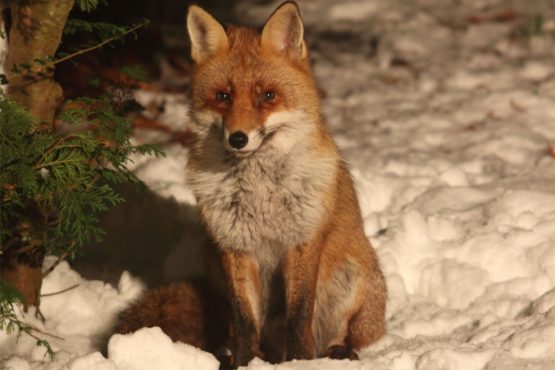
Snare Free Scotland Briefing for MSPs
This briefing note by OneKind and the League Against Cruel Sports Scotland was provided to MSPs for the Members Day debate on a snare-free Scotland on 18 May 2017.
Read the document