
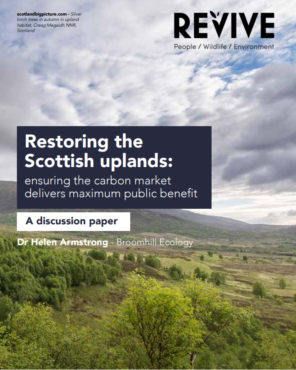
Much of the 70% of Scotland’s land area that is classed
as upland is ecologically degraded. Restoration of this
land is urgently needed to help tackle both the climate
and biodiversity emergencies and to provide resilience to
future change. Scotland’s degraded uplands have huge
potential to capture and store carbon through changes
in land management.
Muirburning for grouse: does it increase or decrease net carbon emissions?
This independent report (commissioned by REVIVE) debunks the surprising claims by opponents of grouse moor reform that muirburn is somehow good for the environment and carbon sequestration. The report also shows that reducing/ending muirburn can unlock greater opportunities for biodiversity and carbon sequestration in our uplands.
Towards a robust and comprehensive licencing scheme for shooting estates
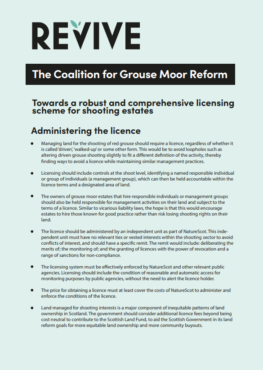
This briefing outlines what grouse moor licencing should look like, what it should achieve and looks at how accompanying legislation should end the circle of destruction that surrounds the controversial industry. If these recommendations are put into place the unnecessary intensity of grouse moor management will end.
If these recommendations are adopted by the Scottish Government, they will achieve their own stated goal of allowing a transition to better land uses for our economy and biodiversity. This will benefit our people, our wildlife and the environment.