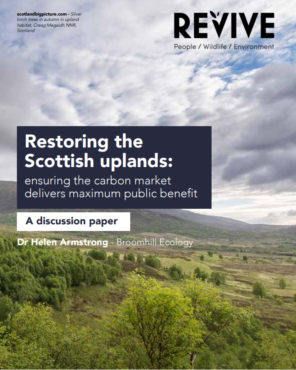
Much of the 70% of Scotland’s land area that is classed
as upland is ecologically degraded. Restoration of this
land is urgently needed to help tackle both the climate
and biodiversity emergencies and to provide resilience to
future change. Scotland’s degraded uplands have huge
potential to capture and store carbon through changes
in land management.
Towards a robust and comprehensive licencing scheme for shooting estates
This briefing outlines what grouse moor licencing should look like, what it should achieve and looks at how accompanying legislation should end the circle of destruction that surrounds the controversial industry. If these recommendations are put into place the unnecessary intensity of grouse moor management will end.
If these recommendations are adopted by the Scottish Government, they will achieve their own stated goal of allowing a transition to better land uses for our economy and biodiversity. This will benefit our people, our wildlife and the environment.
Calculating Cruelty: The results of a field study showing that up to a quarter of a million animals are killed each year in Scotland to ensure more grouse can be shot for “sport”
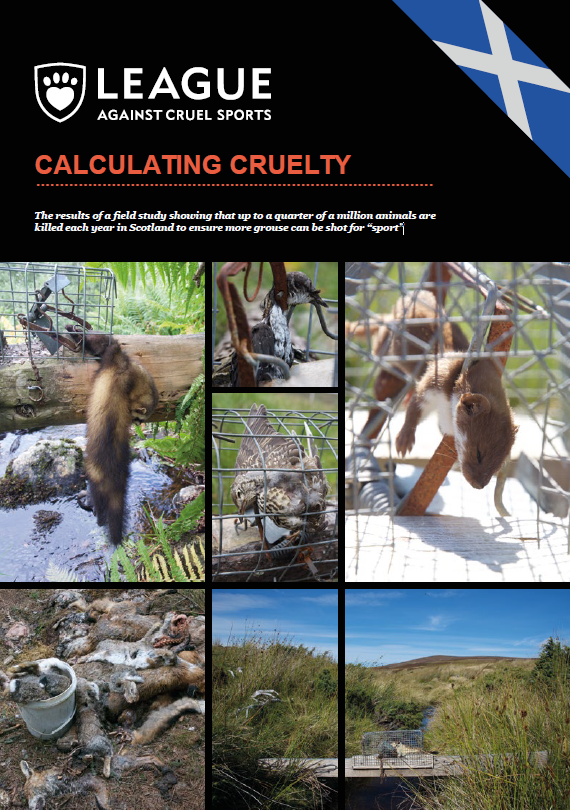
This report reveals that up to a quarter of a million animals are killed each year in an attempt to totally eradicate foxes, stoats, weasels, along with any other animal that indiscriminately fall into the traps and snares. Research shows that nearly a half of the animals killed are “non target species” such as hedgehogs, dippers and mistle thrush. This killing happens for one reason – to ensure there are more grouse to shoot for “sport”.
Hanged by the feet until dead: An analysis of snaring and trapping on Scottish grouse moors
by Professor Stephen Harris (BSc PhD DSc) and Bruce Thain Download link at the bottom of the page Download link […]